
ADA Website Compliance Services
Can Everyone Use Your Site?
If people can’t use your website, they won’t. It’s that simple. Web accessibility is the difference between a site that generates traffic and one that users exit out of in two seconds. People assume that web accessibility solutions are for visitors with disabilities, but it benefits everyone. We are all better off when websites are easier to see, read, and navigate.
So before we talk code, let’s start with what web accessibility looks like:
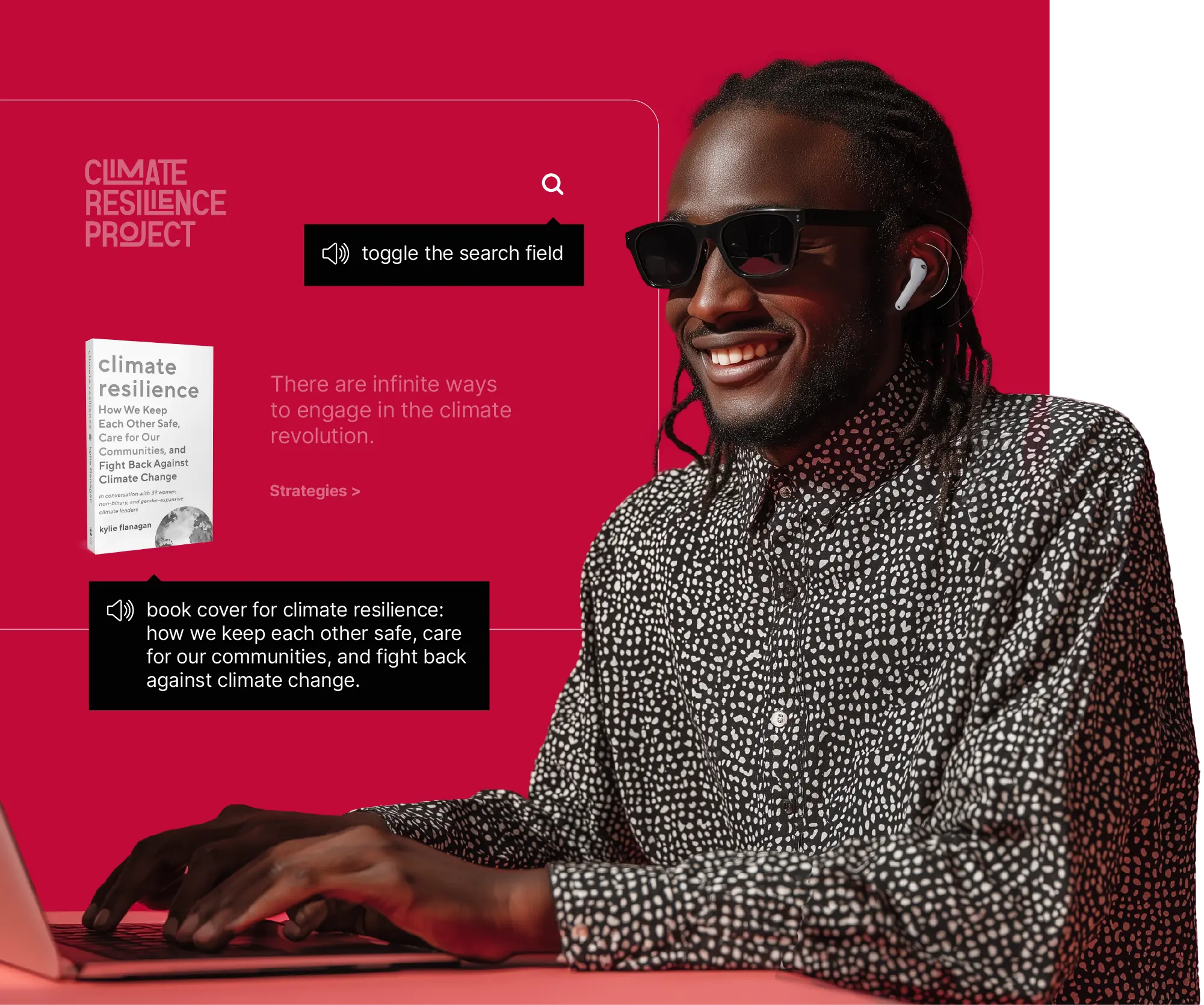
- Keyboard navigation allows users can navigate the entire site.
- Colors and fonts work for users with varying vision needs.
- Screen reader friendly with hierarchal layouts following best practices.
We make sure everyone can use your site from top to bottom without frustration.
Accessibility Is Like Getting an Extended Warranty (But Better)
Accessibility is like the extended warranty on a new TV. You walk in focused on the price, but then you realize what’s at stake.
And with web accessibility, a lot is at stake.
- Money. Companies get sued all the time for inaccessible websites. There were over 5,000 lawsuits for digital accessibility in 2025.
- Your website ranking on Google. Accessibility structures your website properly for SEO and GEO, so both search engines and AI platforms can find you.
- Your customer base. 28% of American adults have a disability. If your website isn’t accessible, then you’re limiting your clientele.
Accessibility design offers protection and opportunity. You’re protecting yourself from a potential lawsuit and opening the door to more business.
It just makes sense for any company to allow 100% of customers to do business with them.
Conrad Strabone, Managing Partner and President | e9digitalWhat Is Web Accessibility?
We don’t rely on automated reports or generic tools to design an accessible website. We test your site the way real people do, with different devices, assistive tech, and real-life use cases.
Here’s what we focus on:
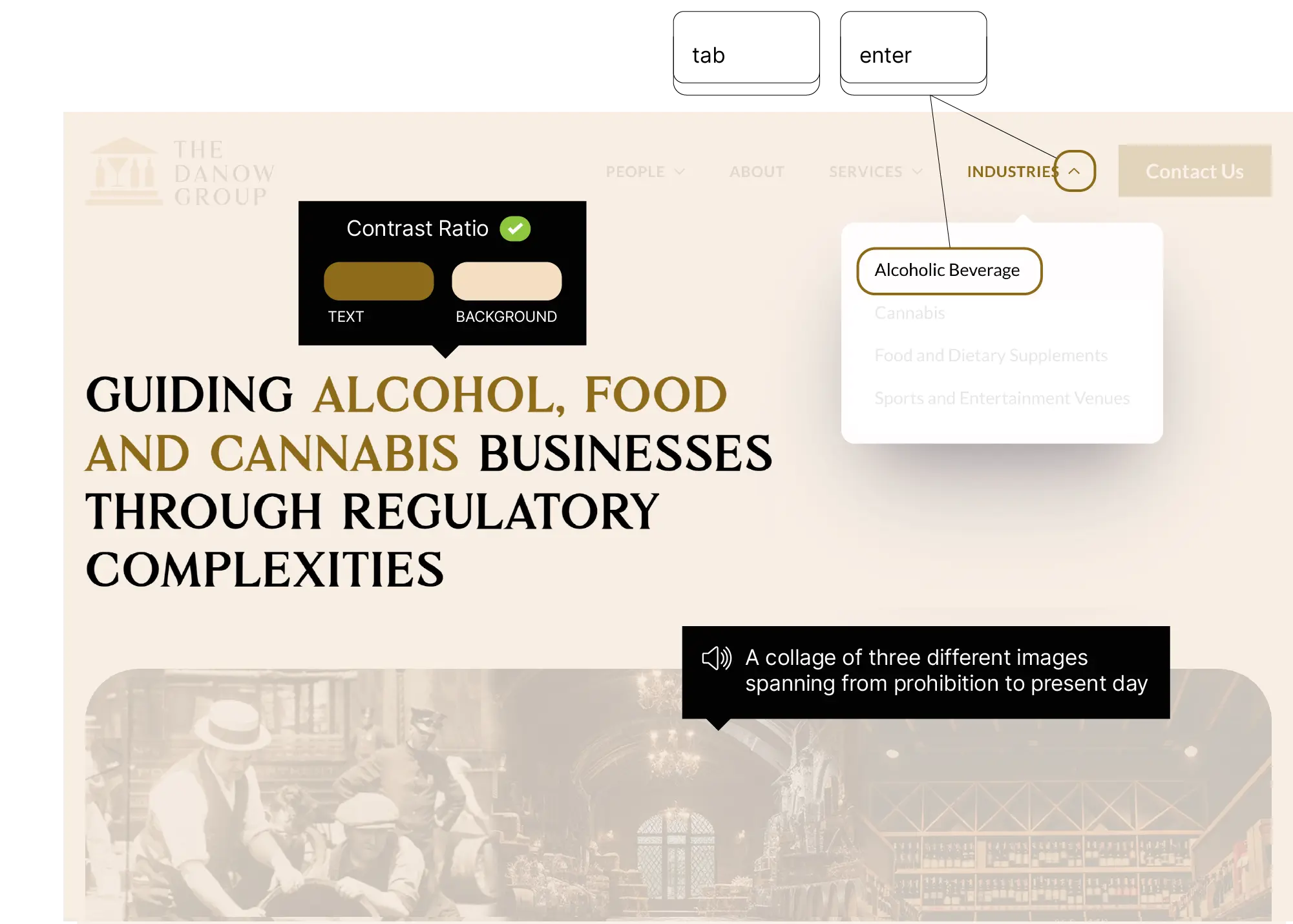
- Color contrast that passes WCAG 2.2 AA (and doesn’t make people squint).
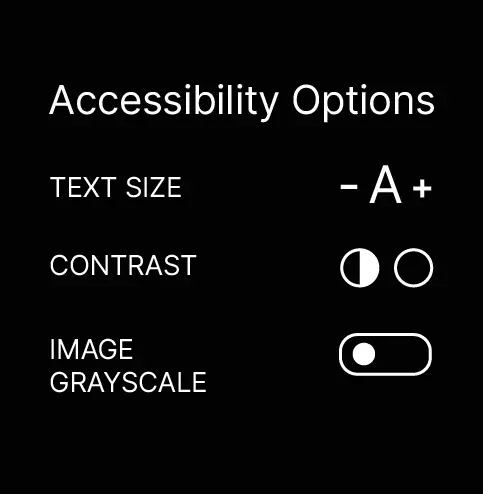
- Readable font sizes and spacing that keep eyes relaxed, not strained.
- Keyboard navigation that actually works.
- Alt text that adds value, not clutter.
- Headings and labels that follow a logical order.
- Forms and PDFs that people can fill out, no matter their setup.
Many agencies consider web accessibility a final box to check at the end of a website design. For our team, it’s a critical milestone to attain optimal functionality.
Accessibility forces you to design smarter. You have to understand best practices, making sure any beautiful design for your target market is also accessible.
Conrad Strabone, Managing Partner and President | e9digital
Why Is Web Accessibility Important?
When many people think of the Americans with Disabilities Act (ADA), their minds may jump to physical requirements like ramps and accessible seating. However, this legislation applies to online spaces, too.
As of 1996, the Department of Justice ruled that websites were considered a “place of public accommodation.” If it’s not usable by someone with a disability, you might be violating federal law.
~5,000 ADA website lawsuits are filed annually.
Most lawsuits can be avoided with a little upfront planning. Designing inclusively from the start is faster, cheaper, and simply better.
e9digital Helps You Meet or Exceed WCAG 2.2 AA Standards
This is the benchmark for digital accessibility. You’ll reduce legal risk, reach more users, and improve your overall site experience.
We don’t hand you a PDF report and disappear. We get in there and make changes that matter to your code, content, and process. We offer both an accessibility audit & more narrow WCAG audit.
If you own a restaurant, why would you not want the customers who are visually or auditory-impaired to be able to dine with you? Accessibility is an investment but it pays off being able to serve that community.
Conrad Strabone, Managing Partner and President | e9digitalWhy Can’t I Just Use an Overlay?
Accessibility overlays are a Band-Aid, not a solution. They are tools that sit on top of a website and claim to improve its usability for people with disabilities without altering the site’s underlying source code.
However, no overlay on the market can make a website fully ADA-compliant.
- Overlays can only detect a small portion of accessibility problems.
- The majority of accessibility issues require manual testing and code-based remediation to be solved.
Since overlays don’t solve most accessibility issues, they leave websites legally vulnerable.

With updates for WordPress, plug-ins, and content, websites are always in a state of flux. It’s important to keep an eye on it.
Conrad Strabone, Managing Partner and President | e9digital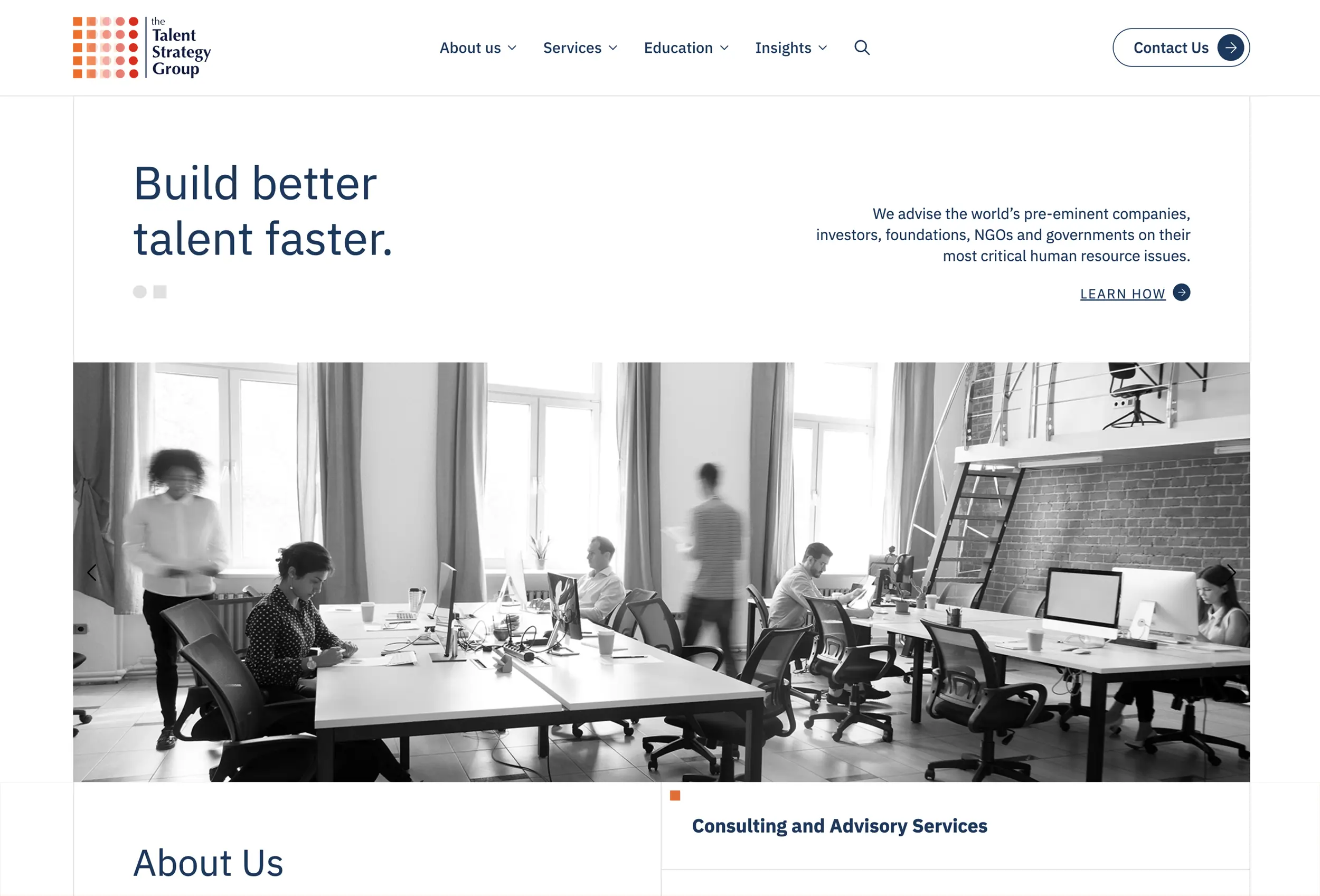

e9digital Keeps You ADA Compliant
Standards evolve, content changes, and every update can affect ADA compliance. That’s why we offer:
- Ongoing web accessibility reviews.
- Updates when regulations or guidelines change.
- Clear training for your team, so they don’t accidentally undo improvements.
We keep your site usable, compliant, and ahead of the curve.
The e9 team was responsive and supportive. They paid attention to who our brand is, and as a DEI professional, I am thrilled with the way e9 promotes ADA and website accessibility best practices for the user experience.
Professor Elissa H. Buxbaum, Founder and Director of Education | One Us ConsultingWhat Does Your Site’s Accessibility Say About You?
Accessibility shouldn’t be a legal checkbox or a PR move. It’s a signal that you want everyone to engage, buy, or connect without barriers.
For some, it’s about avoiding lawsuits. For others, it’s about reaching the widest audience possible. But for everyone, it’s about creating a better web experience that feels open and inclusive.
When your site works for all kinds of users — different abilities, devices, and ways of interacting — you’re taking part in building a better world.
That’s the kind of digital design that stands out for the right reasons.
New York, NY